
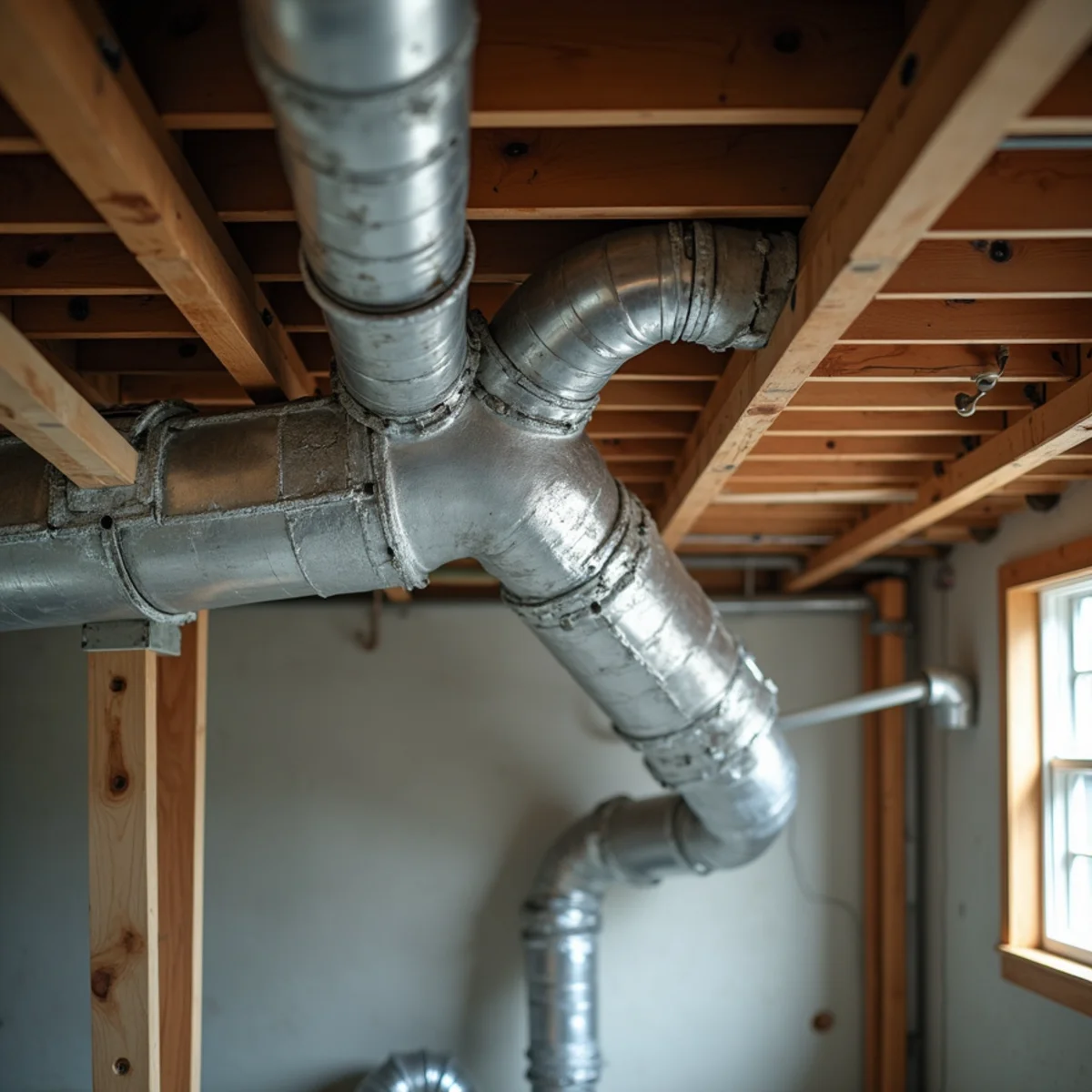
In mid-century Broomall and Marple Township homes built around 1957, ductwork was engineered strictly for gravity or low-velocity heating furnaces that required only 400 to 600 CFM (cubic feet per minute) of airflow. When modern 2.5- to 3.5-ton central air conditioners requiring 1,000 to 1,400 CFM are connected to these original supply trunks and undersized return drops, total external static pressure spikes above 0.8 inches of water column (in. w.c.). This causes loud register whistling, high electric bills, premature blower motor burnout, and hot upstairs rooms.
Many homeowners across Broomall, Springfield, and Havertown blame their air conditioning equipment for poor summer comfort, when the true underlying bottleneck is the galvanized sheet metal ductwork hidden above basement ceilings.
At Littlejohn Air Pros, our technicians use calibrated digital manometers to diagnose airflow bottlenecks, recommending cost-effective duct modifications that permanently relieve static pressure and restore whisper-quiet whole-home comfort.
What Is Static Pressure and Why Does It Matter in 1950s Homes?
Think of total external static pressure (TESP) like human blood pressure. An HVAC blower motor is engineered by the manufacturer to push air against a maximum resistance of 0.50 inches of water column (in. w.c.). When ductwork is undersized, choked by restrictive filters, or constricted by tight 90-degree elbows, static pressure climbs to 0.80, 1.00, or even 1.20 in. w.c.
Under high static pressure, modern ECM variable-speed blower motors ramp up their RPMs to force air through the restriction. This draws massive electrical wattage, produces loud whooshing or high-pitched whistling sounds at supply grilles, and dramatically reduces the lifespan of the motor bearings and electronic module. Over time, high static pressure also causes furnace heat exchangers to overheat in winter and AC evaporator coils to freeze in summer.
The 400 CFM Rule: Why Cooling Requires Twice the Duct Volume of Heating
The fundamental engineering reason why 1950s Broomall duct systems fail with modern central AC comes down to air density and thermodynamics. Warm air from a gas furnace naturally rises through vertical duct risers, requiring only about 100 to 150 CFM per ton equivalent to heat a room.
In contrast, residential air conditioning systems mandate a strict 400 CFM per ton of cooling capacity (or 350 CFM in high-humidity climates for dehumidification). A typical 3-ton central AC requires 1,200 CFM of continuous airflow. Pushing 1,200 CFM of dense, heavy cold air through duct risers designed for 600 CFM of warm air is physically impossible without creating immense pressure resistance and leaving second-floor bedrooms starved for air.
Need emergency heating or AC repair in Broomall?
Dispatchers are on call 24 hours a day to send an insured technician to your home.
Engineering Remedies for 1950s Delaware County Duct Systems
- Enlarging the Basement Return Air Drop: Most 1950s ranches and split-levels were installed with only a narrow 10x24 or 12x20 return drop connected to the furnace. Expanding this connection to a 16x25 drop with a radius turning elbow immediately lowers static pressure by 0.15 to 0.25 in. w.c.
- Upgrading to a 4-Inch Deep Pleated Media Cabinet: Standard 1-inch pleated allergy filters create immense airflow resistance. Replacing them with a 4-inch or 5-inch deep media filter cabinet provides superior particulate filtration with a fraction of the pressure drop.
- Sealing Main Trunk Seams with Mastic Paste: Unsealed slip-and-drive sheet metal joints frequently leak up to 30% of conditioned air into unconditioned basements and crawlspaces. Aeroseal or hand-applied mastic paste stops conditioned air loss.
- Adding Dedicated Branch Runs or High-Wall Returns: Installing a dedicated 7-inch or 8-inch round branch duct directly to hot second-floor rooms balances volumetric airflow without requiring full home renovation.
How High Static Pressure Destroys Equipment and Voids Warranties
When a new high-efficiency furnace or heat pump is installed on an undersized duct system without testing static pressure, equipment reliability plummets. In heating mode, restricted airflow prevents heat from leaving the heat exchanger, triggering high-limit thermal safety switches that shut down the gas burners. Repeated cycling eventually causes the metal heat exchanger to crack, leaking carbon monoxide into the airstream.
In cooling mode, choked airflow reduces heat transfer across the indoor evaporator coil. The refrigerant temperature drops below 32°F, freezing moisture into a solid block of ice that blocks airflow entirely and sends liquid refrigerant back into the compressor, destroying it. Manufacturer equipment warranties do not cover compressor burnouts caused by chronic airflow starvation.
Before investing in equipment replacement, ensure your contractor performs an ACCA Manual D duct design review. Learn more about our sizing protocols on our HVAC installation page or schedule an airflow audit at (321) 478-0693.