
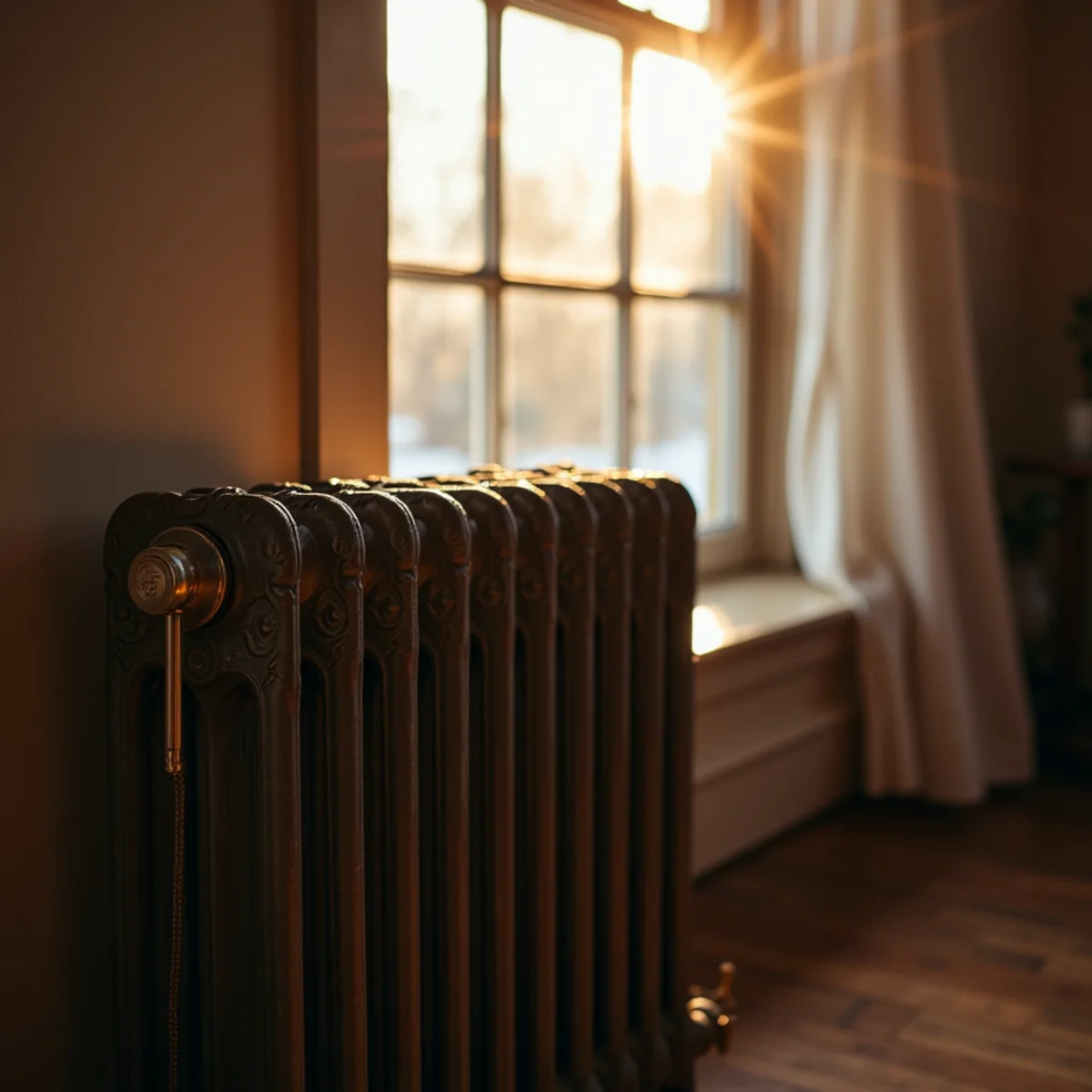
If your boiler is firing and hot in the basement but your radiators remain cold, the problem depends on your system type: in a forced hot water boiler, the issue is almost always trapped air locking circulation in the pipe loop or a seized circulator pump motor; in a steam boiler, the culprit is usually a stuck or clogged radiator air vent that prevents steam from pushing out cold air, or a closed hand supply valve. Bleeding the radiator or clearing the vent usually resolves it.
Throughout Delaware County and Main Line communities like Wayne and Media, hundreds of historic stone homes rely on hydronic heating. While cast-iron radiators provide wonderfully gentle, dust-free radiant warmth, hydronic heating physics can confound contractors who only work on forced-air furnaces.
Diagnosing Cold Radiators in Hot Water Systems
In a modern forced hot water system, water is heated to roughly 180°F and mechanically pushed through copper or iron pipes by an inline circulator pump. When certain rooms stay cold, work through these diagnostic checks:
- Check Radiator Temperature Gradient: Feel the radiator. If it is hot at the bottom but freezing cold at the top, air has accumulated inside the cast-iron chambers. Air is lighter than water and floats to the top, forming an "air lock" that blocks hot water circulation.
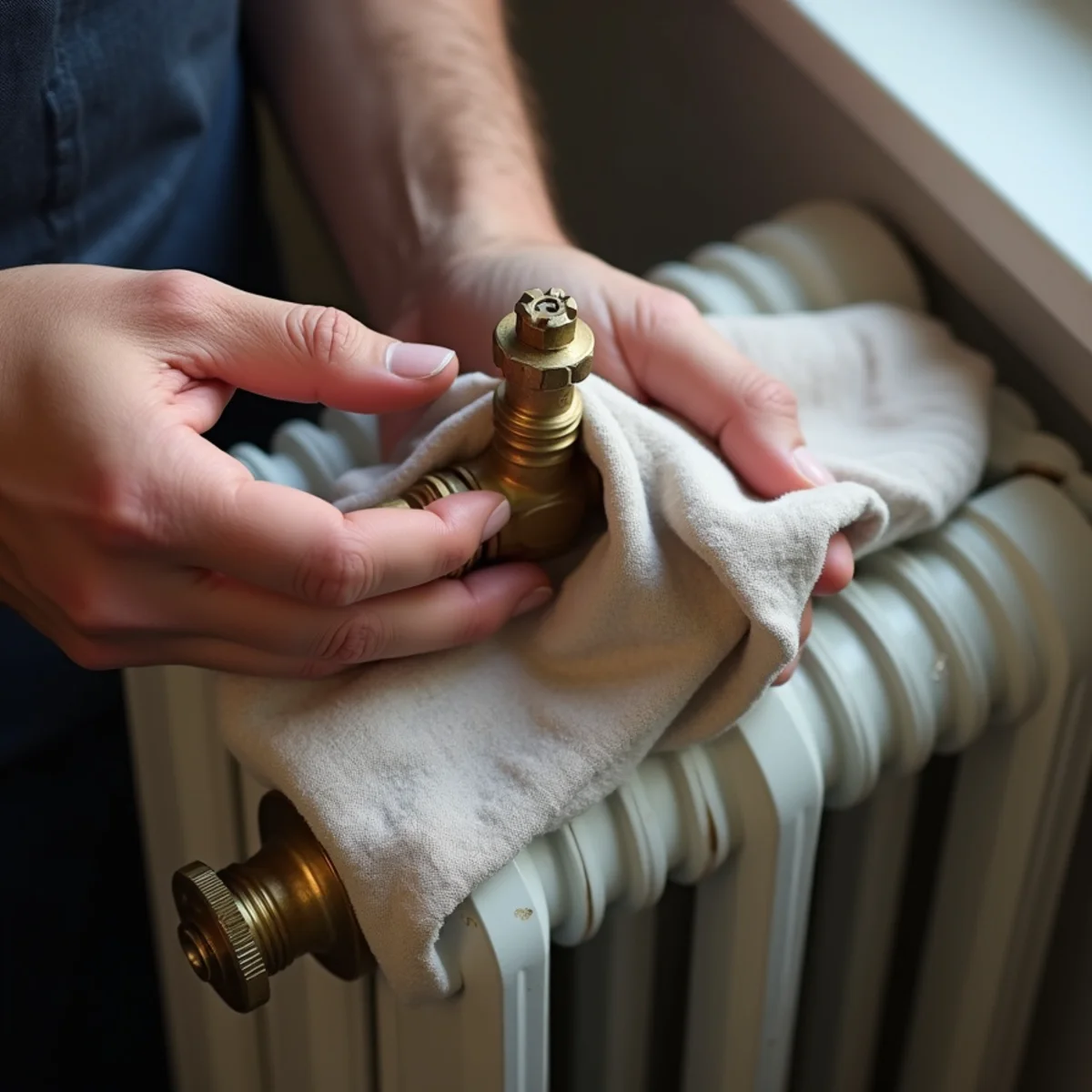
- Bleed Trapped Air Using a Radiator Key: Locate the small brass bleed valve near the top corner of the cold radiator. Place a rag beneath the valve and slowly turn the key counterclockwise a quarter-turn. You will hear air hissing out. When a steady stream of solid water emerges without sputtering, close the valve snugly.
- Inspect System Water Pressure: After bleeding multiple radiators, check the pressure gauge on the boiler in your basement. Closed-loop residential systems require 12 to 18 PSI of water pressure when cold. If pressure drops below 10 PSI, the automatic water-feeder valve may be clogged or closed, leaving upper floors with insufficient water to fill the pipes.
- Listen to the Circulator Pump: Place a long screwdriver against the red or green circulator pump housing and press your ear against the handle. If you hear a quiet, smooth hum, the impeller is spinning. If the pump is silent, vibrating violently, or blazing hot to the touch, the motor bearings have seized.
Diagnosing Cold Radiators in Single-Pipe Steam Systems
Steam heating operates on completely different principles than hot water. When the boiler boils water, steam expands and rushes through empty pipes. For steam to enter a radiator, the cold air currently inside that radiator must escape through the bullet-shaped air vent on the side.
If that air vent is clogged with mineral scale, coated in layers of old wall paint, or stuck closed, cold air is trapped inside like a cork. Steam cannot enter, and the radiator remains stone-cold. Replacing the air vent with a quality Hoffman or Maid-O'-Mist vent takes five minutes once the system cools down.
Steam Hand Valves Must Be Fully Open or Fully Closed
In single-pipe steam systems, steam rises up the pipe while condensed water trickles back down the exact same pipe. Never partially throttle a steam radiator valve to "lower the temperature" — doing so causes violent water hammer banging and floods the floor with rust water.
Need emergency heating or AC repair in Broomall?
Dispatchers are on call 24 hours a day to send an insured technician to your home.
When to Call a Professional Hydronic Specialist
If bleeding the radiators fails to restore circulation, or if system pressure repeatedly drops to zero, you likely have an internal zone valve failure, a waterlogged expansion tank, or an underground pipe leak. Learn more about our specialized boiler repair services or call (321) 478-0693 for immediate 24/7 technical dispatch.